1. The Importance of Safe and Functional Glass Candle Jars
Glass candle jars have become the centerpiece of home fragrance branding; however, they are no longer a mere aesthetic extension of the product. The key concern of a high-quality glass candle jar manufacturer like Mosteb has, thus, substantially shifted from just looking good to ensuring maximum safety and enhanced functionality. The change stems from an in-depth understanding of the science behind the materials, fabrication, and the expectations of the end-user. Safety isn’t just about avoiding breakage for a professional glass candle jar maker. It includes glass composition control, wall thickness, thermal resistance control, and production uniformity control to provide consistent burning performance regardless of the candle formula.
2.Safety Priorities for Glass Candle Jar Manufacturer
The soundness of a glass candle jar is the base of consumer and property safety. As a specialized glass candle jar manufacturer, Mosteb implements strict safety measures that counter the susceptibilities of glass to be harmed by heat and mechanical forces.
2.1. Thermal Shock Resistance: The Foremost Challenge
Thermal shock constitutes the main reason why glass candle jars may fail. Glass subjected to rapid temperature change can cause localized stress which could be beyond the material’s strength leading to areas of the glass cracking or splintering.The most important factors for determining when and where glass will fail include the time of crack initiation, the glass temperature at cracking, the maximum temperature difference at failure, and thermal strain. Researches have also demonstrated that glass may fracture with temperature differences on its surface ranging between 30-35°C and 55-60°C while the time to failure at higher heat flux get shorter.
2.2. Mechanical Strength Against Breakage
The glass’s mechanical strength is vital, after all, apart from the thermal stress. The existence of micro-cracks, chips, glass bubbles, or internal stresses in the glass (for example, insufficient annealing) that come from the production process are stress concentrators, and thus significantly increase the chance of failure.These pieces of glass which are substandard, thin, and especially not heat-resistant are inherently more likely to be cracked or shattered.
2.3. Chemical Inertness to Candle Components
The glass should be a chemically inert material even if it is put side by side with the various candle components such as waxes, fragrance oils, and dyes. Some scent oils, particularly concentrated essential oils, may cause common plastics and elastomers to deteriorate gradually, and this may eventually lead to the compromise of lid seals or, if not properly formulated, even the glass surface interacting with surface imperfections.
2.4. Overall Fire Safety Considerations
Being safe from fire hazards is not limited to the jar retaining its structure, but it also encompasses the jar-candle interactions. For example, improper wick positioning like a wick being too close to the glass wall will cause the occurrence of excessive and very focused heat leading to uneven heating and consequently thermal stressing.Overly large wicks are capable of producing more heat than usual leading to the jar becoming overheated and, thus, damaged. Centering the wick has been suggested as a way out.The choice of the wick material and the size of the wick also play a significant role in determining the burning rate, the height of the flame, the width of the flame, and the diameter of the meltpool. All these factors, in turn, affect the heat distribution and the intensity of the heat that is applied to the jar indirectly as well.
3. Enhancing the User Experience: Advanced Functional Design
Beyond safety, Mosteb primarily emphasizes on advanced and functional design to uplift the user experience, thus making the whole process of enjoying a candle burn very comfortable and gratifying.
3.1. Design Elements for Improved Scent Throw
Scent throw is basically the release of a fragrance and container design determines almost entirely the extent to which this takes place.
- Container Diameter:The use of wider candle containers allows the creation of larger melt pools which are the main factor in attaining stronger hot scent throw.In addition, a wide-mouth bottle also serves fragrance molecules by providing more areas for them to attach and thus diffuse.
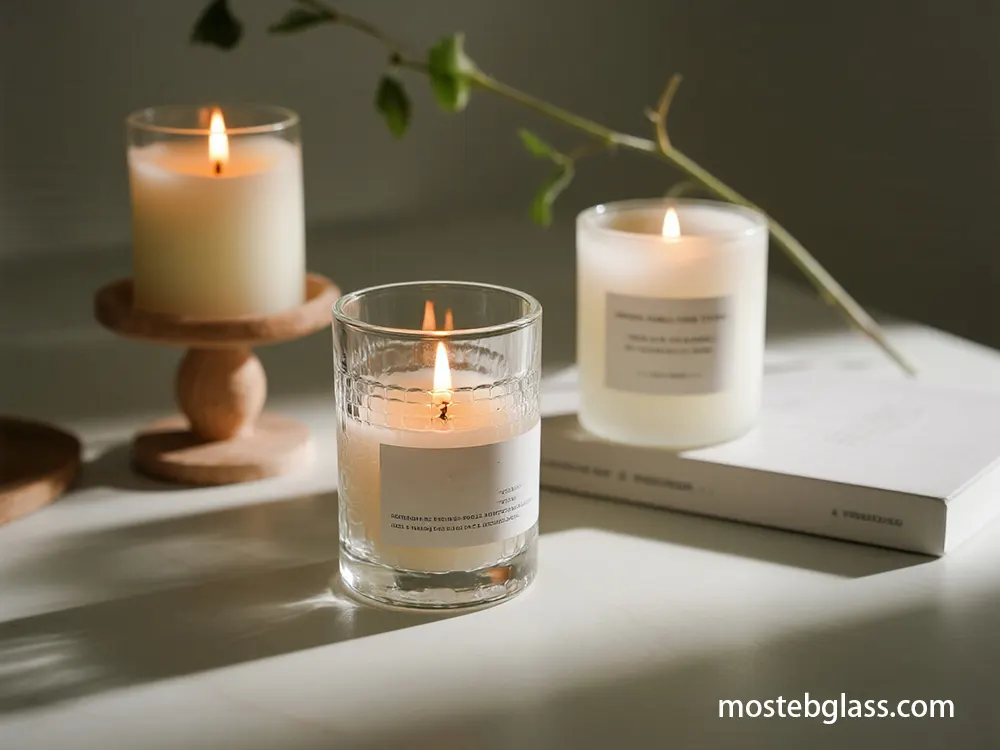
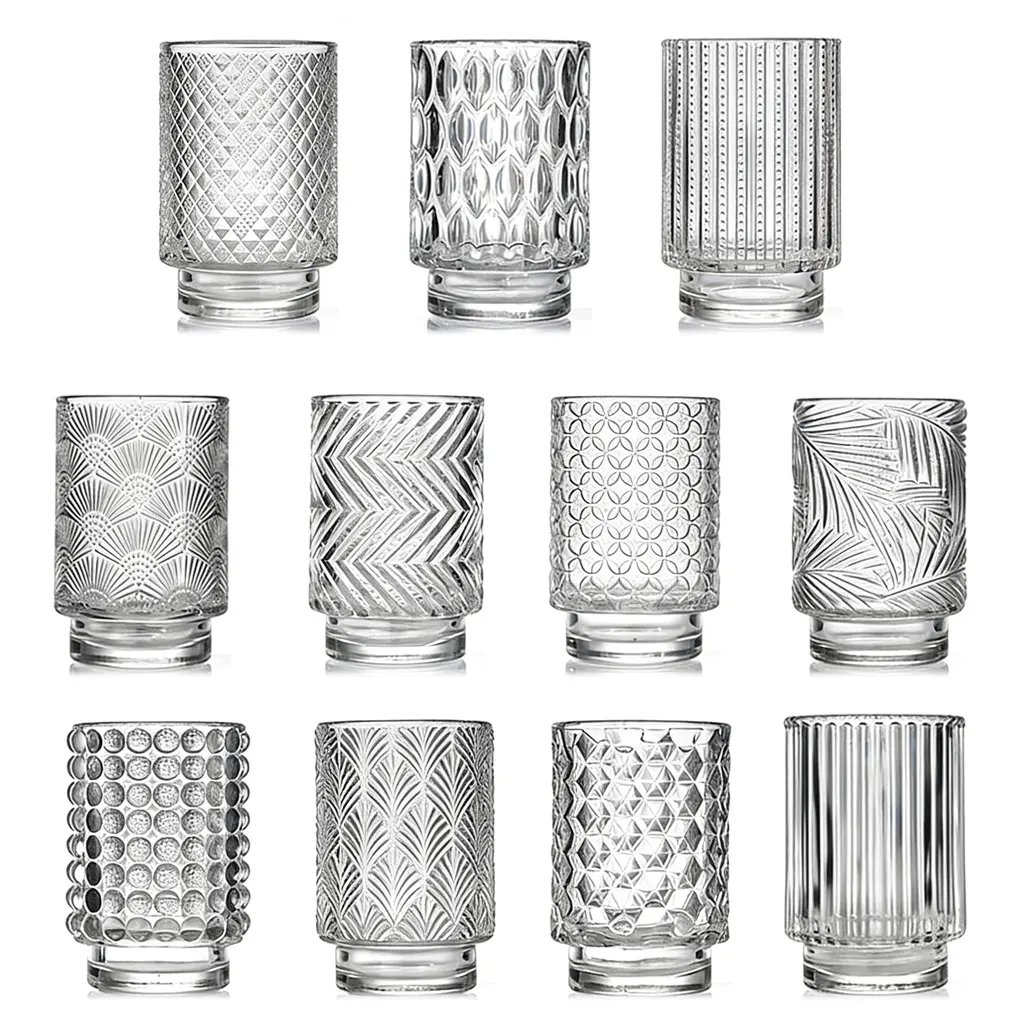
- Surface Texture: On embossed candle jars, the tiny ridges and unevenness of which, can, in theory, result in the increase of the surface area that comes into contact with the wax’s aromatic oils and hence more scent molecules are released without the user’s conscious participation. From personal experiments, one can deduce that as much as 15% more scent can be dispersed in a room because of using embossed jars compared to the plain ones.Nevertheless, if the embossing is very deep or the glass is thick, then at the same time, these factors may contribute to the occurrence of uneven burning as the heat may be trapped in the local areas.
3.2. Precision Lid Fit for Preservation
One of the most important points for a lid is the precision fit which helps the candle to keep its fragrance and makes the lid a protective item for the candle.
- Airtight Seals: Lids need to offer an airtight sealing in order to prevent the liquid evaporation of scented oils and also to protect the candle from dirt and impure air. For this purpose precision manufacturing techniques like injection molding for complex geometries and integrated seals are required.
- Material Selection for Seals: Silicone gasket and O-rings are very good because they have excellent temperature resistance, and acid resistance and are also flexible. But to prevent the specific polymer blends like chemically resistant elastomers from being degraded by concentrated fragrance oils, it is very important to use the right ones.
- Child-Resistant (CR) Lids: For some product types or markets, child-resistant packaging can be an essential safety feature. The mechanisms of such lids include “push-and-turn” or “squeeze-and-turn” operates, designed in accordance with standards like ASTM D3475. Being able to combine these without compromising the look or greatly increasing the price is the main challenge.
3.3. Base Stability and Reusability Considerations
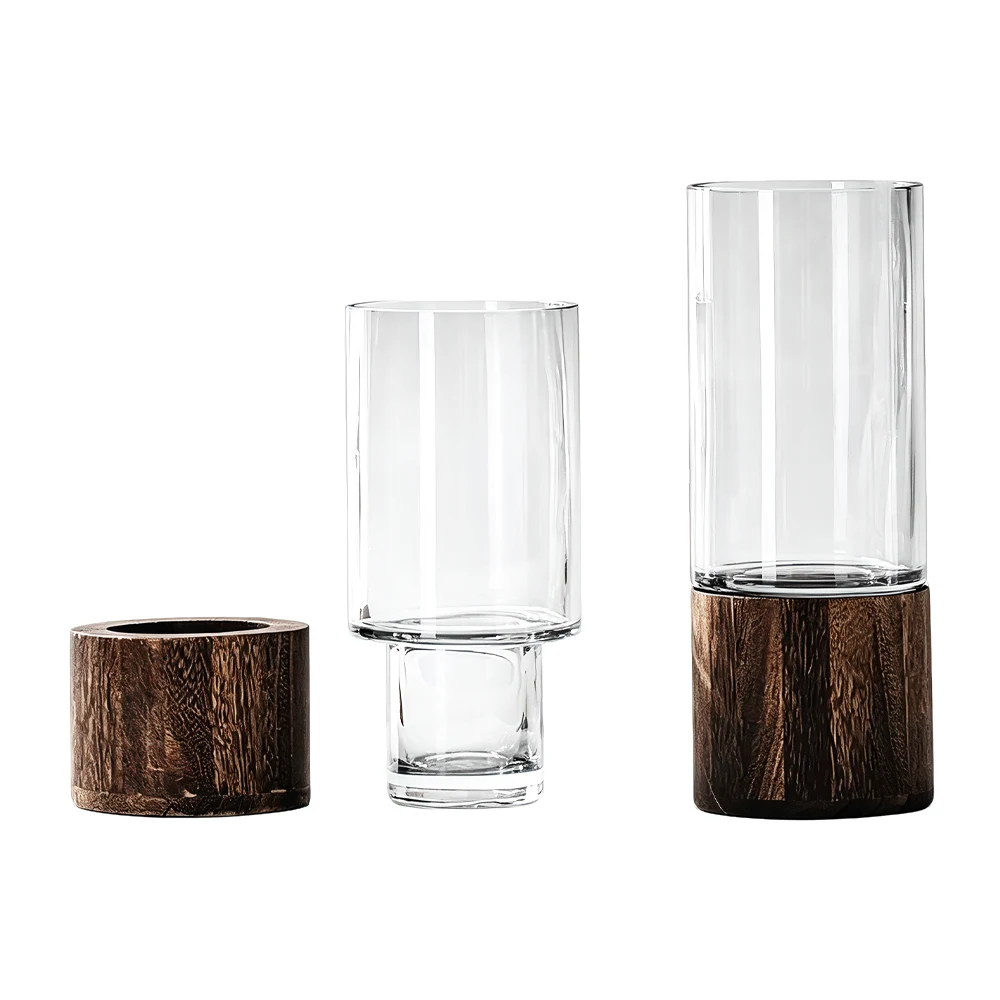
By putting a big, heavy base on a jar of a candle, its stability is ensured and the heat is able to spread away from the surface the candle rests on, especially the area where the flame is going. Besides, the aspects of reusing are becoming more and more important that way they influence the designer in his decision of creating a product that is easy to clean and durable.
3.4. Speculative Thermal Management Elements
- High-Conductivity Composites:A study of composite materials with high thermal conductivity, for example, water-glass-based thermal pastes that include graphite powder (3.71 W/(m⋅K)) or magnesium oxide-graphite (3.09 W/(m⋅K)), point out the potential of such materials for the internal coatings or embedded layers. Hypothetically, such materials can be introduced as internal fins or micro-perforations in a double-wall design that can actively absorb and regulate heat flow, thus optimizing the burn profile and scent throw.
- Phase-Change Materials (PCMs): The current research on the subject does not specify the use of PCMs in candle jars; however, the latter represent a major speculative direction for deliberate thermal management. PCMs could be used to buffer and release the heat that is absorbed thus keeping the temperature at the melt pool relatively stable which in turn would regularize burn and scent delivery. This area remains almost unexplored.
4. Manufacturing Processes Behind Reliable Glass Candle Jars
Mosteb’s glass candle jars undergo a variety of sophisticated manufacturing processes and Mosteb incorporates modern fabrication methods and material science breakthroughs to deliver the required glass candle jars’ safety and functional Mosteb utilizes high-tech manufacturing techniques and advanced Mosteb employs state-of-the-art production methods and cutting-edge material science innovations to meet the safety and functional requirements of its glass candle jars.
4.1. How a Glass Candle Jar Manufacturer Strengthens Durability Through Advanced Processes
- Annealing:One of the factors that determine the success of annealing is the whole procedure to release the internal stress of the glass, which if left alone weaken the glass greatly even its thermal stability is compromised.Annealing means keeping the glass at a certain temperature (e.g., 510°C-550°C for soda-lime glass) for a long time and cooling it down slowly to room temperature.
- Tempering:
- Trade-offs: As a rule, the cost of production for chemically tempered glass is higher, and its efficiency is lower due to the longer cycle time (e.g., 8 to 16 hours).
4.2. Material Innovations: Specialized Glass Compositions and Protective Surface Coatings
- Specialized Glass Compositions:With reference to Section 3.1, the most important advantage of borosilicate glass over other types of glass is its resistance to thermal shock owing to a very low thermal expansion coefficient.The addition of alumina also improves thermal stability and resistance to thermal shock.
- Protective Surface Coatings:
- Sol-Gel Coatings: These hybrids of ceramics are mostly made by silicon dioxide (SiO2) and produce a very hard, compact, glassy-like surface. They strengthen the glass by the assimilation of existing defects and the bridging of cracks since the flexural strength was reported to be raised from 47 MPa to 98 MPa. Besides, they grant the glass surface with resistance to scratching, the capability of self-cleaning, and also high heat resistance (up to 455°C/850°F).
- Ceramic Coatings: Nanotechnology-based products containing SiO2 interact with the glass surface to manufacture an ultrahard, durable, semi-permanent protective layer, which is the ultimate in protection against wear and tear. These coatings’ lifespan is about 2-5 years, and they provide greater scratch resistance, stronger hydrophobic effects, and the heat absorption may be lowered as well. One of the uses of Cerakote Ceramic Glass Coat Protectant is 9H Pencil hardness and high heat resistance (450°C).
- Polymer Coatings: The soft polymer coatings (e.g., polysiloxane polymeric water emulsion, liquid PVC) that are applied on the outer surface of the glass containers contribute to the overall strength, in particular, the scratch resistance is improved, and most importantly, in the case of glass breakage, the shattered glass and the liquid will be kept inside.The ONECOAT system, which is based on polysiloxane chemistry, is waterborne and glass recycling friendly as it breaks down to SiO2.
4.3. Advanced Quality Control: AI-Driven Optical Inspection
Mosteb uses state-of-the-art AI-powered optical inspection systems that are very effective. In short, these systems use a deep learning model like Convolutional Neural Networks (CNNs) to identify and classify a large variety of tiny glass defects that might be under the surface of the glass are also possible. These include inclusions, striae, micro-cracks, stress points, and changes in wall thickness.
- Enhanced Accuracy and Speed: AI-driven Automated Optical Inspection (AOI) systems can reach accuracy levels of up to 99.86% compared to manual visual inspection, which is only 80-85%, thus drastically reducing false positive and negative cases. Moreover, they permit high-speed, real-time processing, which is usually carried out by edge computing, and this results in immediate feedback and quick decision-making on the production line.
- Seamless Integration and Predictive Maintenance: Such systems can be easily incorporated in the present manufacturing lines where they provide real-time data for the immediate adjustment of the process, which is essential for ‘zero-defect’ production. By the same token, quality control becomes predictive maintenance by AI through the analysis of sensor data to recognize patterns that signify the imminent failure of the equipment, thus lessening the unplanned downtimes.
- Advanced Imaging and Robotic Integration:AI augmented by multispectral imaging and hyperspectral imaging (HSI) in the Near-Infrared (NIR) can not only detect the subsurface of the materials for defects but can also determine the film thickness and other properties with extremely accurate precision. Besides, the latest technology integration systems can even do it themselves by starting the removal or correction process via connected robots without human intervention for the most common problems.
- Overcoming Challenges of Transparent Materials:The specialized lighting setups (LED, backlighting, and ring lights) together with commercial-grade cameras of extremely high resolution have been purposely designed to solve the problems arising from the inspection of transparent and highly reflective glass surfaces and, as a result, allow for reliable defect detection in a wide range of glasses.
5. Navigating the Landscape: Regulatory Standards and Market-Driven Demands
The worldwide regulatory framework for the safety of candle containers is quite complicated and requires a very careful approach to compliance. Mosteb works through these different requirements to ensure both access to the market and consumer trust.
5.1. Influence of Specific Regulatory Standards
- US Standards (ASTM & CPSC): ASTM F2179 (updated 2020) is a standard that defines requirements for the glass used in candle containers and sets performance criteria by which the products should be tested (annealing, thermal shock resistance, and scratch testing). In order to meet requirements, every batch of glass used in production has to go through a tightly controlled process, and there should be no failures. When determining compliance with the thermal shock resistance test, a temperature differential of 50 °C is usually employed.The U.S. Consumer Product Safety Commission (CPSC) also contributes to product safety through the setting of standard requirements.
- California Proposition 65: This regulation requires warnings on products that emit over 900 different chemicals that have been known to cause cancer, birth defects, or reproductive harm. The manufacturers have to eliminate the substances like phthalates, benzene, lead, and toluene from candles that are sold to the Californian market.
- EU Regulatory Framework (GPSD, GPSR, EN Standards): An integrated multi-level structure is utilized by the EU with the General Product Safety Directive (GPSD) 2001/95/EC and General Product Safety Regulations (GPSR) supplementing the Directive and other laws in the area of product safety. The core standards here are EN 15493:2019 for fire safety (stability, flame height, self-extinguishing, re-ignition),and EN 15494:2019 for product safety labels, which offers in-depth guidance on the design and content, also providing alternatives for limited label space. The EU REACH and CLP are also imposing stringent restrictions on the quantities of chemical substances permissible, in addition to requiring that these substances be labeled appropriately when they are hazardous.
- Canadian Regulations (SOR, ASTM):Canada’s SOR/2016-165 (Candle Regulations), is a regulatory document for the candle industry, which often refers to the technical standards published by ASTM such as ASTM F2417-17 for fire safety and ASTM F2058-07(2021) for labeling.A very significant provision is that bilingual safety warnings and instructions must be provided both in English and in French, and the minimum size of the warning font should not be less than 1.5 mm.
- Australian Consumer Law (ACL): Australia does not have any specific standards related to the manufacturing of candles, but it depends on the general Australian Consumer Law (ACL) and Trade Practices Act, which are enforced by the ACCC. The ACCC has issued a permanent ban on the use of combustible candle holders and wicks that contain more than 0.06% of lead. The provision for warning labels is part of the legal framework although the format is less prescriptive.
- Japanese Regulations (PLA, CPSA): Japan is very particular about deciding the components that go into the product, therefore it requires the listing of the raw material components as well as the burning temperature for perfumed candles. PSE certification is mandatory for electronic candle safety concerns. Japan’s Product Liability Act (PLA) is very strict and holds manufacturers directly responsible for any damages that may result from defects in their products, while the Consumer Products Safety Act (CPSA) requires that “Serious Product Accidents” be reported.
5.2. Market-Driven Demands and Unique Requirements
Different market segments impose unique safety and functional requirements:
- Luxury Market: Besides requiring excellent looks, high-quality materials (e.g., borosilicate glass), and usually the unique designs, luxury market also demands rigorous safety testing to maintain the reputation of the brand.
- Mass-Market: Focuses on price and volume of production which implies the need for the efficient production processes (e.g., thermal tempering) with the safety standards being at the minimum level.
- Outdoor Use: Requires increased abilities of withstanding the wind, holding the balance, and possibly more strong glass compositions or coating in order to resist the outdoor elements.
- Sustainability-Focused Consumers: Are the main reasons for the recycled content, recycling-friendly designs, and clear solutions for the product life cycle transparency.
5.3. The "Container as Part of the Candle System" Approach
Regulations frequently consider the container to be a component of the candle’s safety performance. As a result, the container’s material, its condition, stability, and resistance to heat have to be tested together with the specific wax and wick combination. If wick size, fragrance load or container dimensions are changed, it is necessary to go through testing again.
6. Future Horizons and Sustainable Cycles
Mosteb is actively involved in the search for future trends and sustainable solutions, which covers not only the innovative glass technologies but also the comprehensive end-of-life solutions for its glass candle jars.
6.1. Challenges in Current Recycling and Reuse
- Incompatibility of Specialized Glass: As a rule, glass candle jars are made of tempered or borosilicate glass, both of which have higher melting points and as such, are not compatible with the standard glass recycling streams. This results in contamination and the glass ending up in landfills.
- Contamination from Residue: Residual wax, wicks (in particular, metal ones), fragrance oils, and the likes of metalized finish, glitter, and decals are some of the most difficult contaminants that not only interfere with recycling but also lower the quality of the cullet.
6.2. Advanced Sorting, Cleaning, and Remanufacturing Processes
- Industrial Sterilization for Reuse: When talking about direct reuse, sterilization on an industrial scale is a must. Among the methods are soaking in boiling water, use of dishwashers with the “sanitize” feature, oven methods (120 °C for 10-15 minutes), and hot-fill techniques.To perform these, residue-free thorough pre-cleaning is obligatory.
- Novel “As-Is” Glass Up-Casting: This innovative technique allows the casting of volumetric glass parts straight from “as-received” glass waste and at lower temperatures (750–1200°C). It is very adaptable since it can handle a broad range of glass compositions and can also tolerate more contamination while requiring less purification.
- High-Purity Cullet Production:Purly recycling from jar-to-jar and thus being truly closed-loop, is only possible if the cullet is of very high purity. The “Close the Glass Loop” initiative is reaching 90% collection rates and high recycling efficiency, thus it is possible to significantly reduce virgin material, energy consumption, and CO2 emissions.
6.3. Successful Case Studies and Programs
Many candle brands have introduced consumer take-back and refill programs, offering the incentive of discounts or credits for returns. Some of the brands are Mill Pond Candles, Get Lit Candle Co., Noël & Co., CandleXchange, Slow Made, and The Candle Lab. Besides that, big brands and consortia are also working on reusable packaging systems like Loop in collaboration with Unilever, which is a way to show the shift towards deposit-return models.
Conclusion: Choosing the Right Glass Candle Jar Manufacturer
However, when choosing a glass candle jar manufacturer for your brand, it is not just about your supplier being able to offer you a design that you like. Quality of the candle material, uniform production, safety testing, and the ability to customize the package are all essential to reliable candle packaging.
Every aspect of a candle’s composition and thermal stability to surface decoration and bulk production control can affect the quality of the finished product. A professional manufacturer assists brands in lowering product quality risks, enhancing product performance, and building packaging in line with their market positioning.
Having a broad range of expertise in customised glass candle jars, Mosteb offers solutions to brands needing stable supply, customisation flex and support with reliable production. Mosteb brings manufacturing know-how and ongoing improvements in safety and sustainability to the global candle industry, enabling these companies to create innovative packaging solutions.