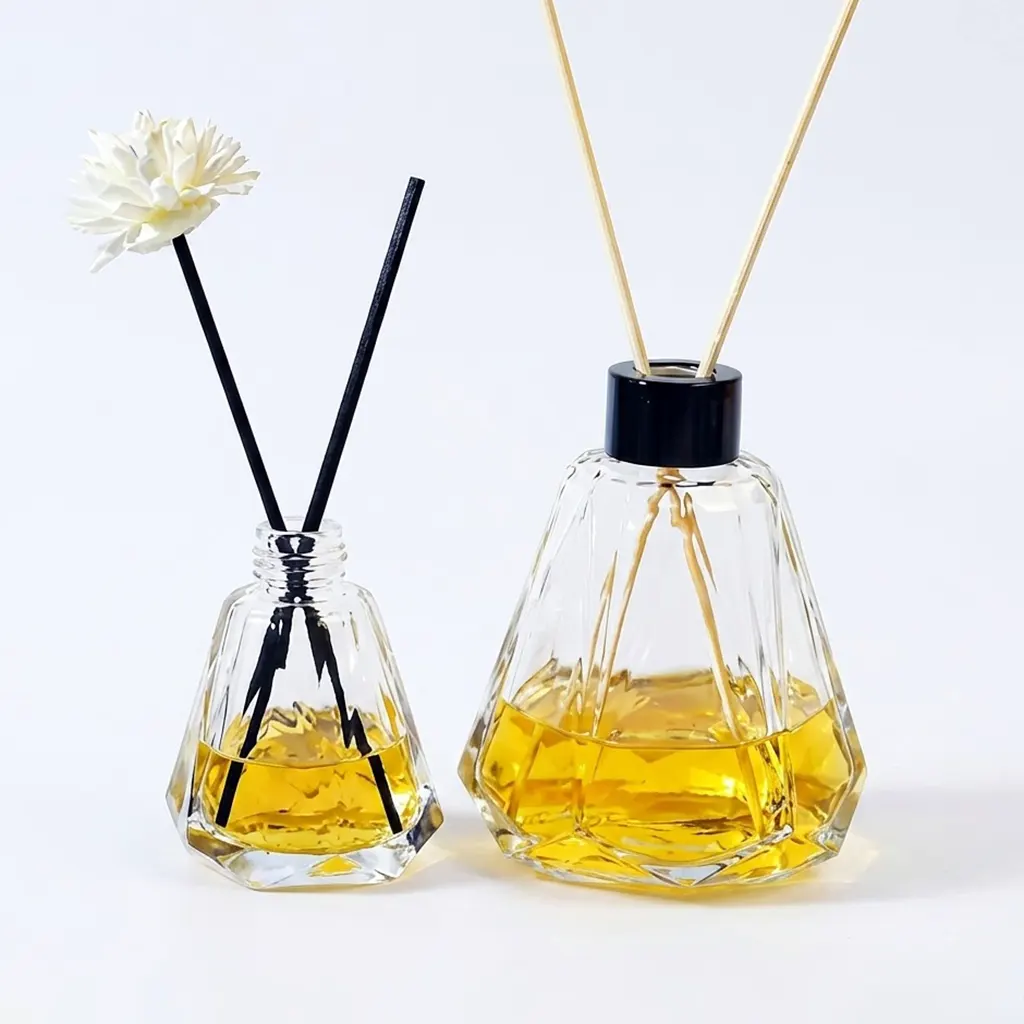
The same moment in sourcing meetings always occurs at the same point of time.
A buyer holds two samples—same shape, same finish, same weight in hand—and assumes both samples operate in the same way because both samples are made of glass. But that assumption is where most compliance problems begin, especially when we talk about soda-lime vs borosilicate glass diffuser bottles heavy metal leaching, because what looks identical externally can behave very differently once it is exposed to essential oils, alcohol-based carriers, temperature shifts, and long storage cycles.
The uncomfortable truth about glass exists because different materials produce different levels of inertness in glass.
The substance has a reactive capacity. It occurs at a pace which people tend to overlook.
1. Material Difference That Actually Matters in Compliance
Soda-lime glass dominates the packaging industry for one reason—it is cheap and scalable. The material consists mainly of silica (SiO₂) and sodium oxide (Na₂O) and calcium oxide (CaO), which enables easy construction of its structure for mass production yet results in mobile alkali parts that will take part in ion exchange processes when the material comes into contact with certain chemical substances.
Borosilicate glass, on the other hand, replaces part of that alkali-sensitive network with boron trioxide (B₂O₃), creating a tighter molecular structure with significantly lower thermal expansion and reduced chemical reactivity. The material demonstrates minimal interaction with aggressive compounds which exist in diffuser oils when exposed to the temperature changes that occur during shipping and storage.
This is not theoretical chemistry—it is the reason laboratory glassware and pharmaceutical containers rarely rely on soda-lime formulations when long-term stability is required.

2. Heavy Metal Leaching: Where Risk Actually Comes From
The term “heavy metal leaching” which sounds serious normally results in work activities that require compliance testing for minor element movement which includes lead (Pb), cadmium (Cd), arsenic (As), and antimony (Sb) that come from raw materials or recycled cullet or the colorants used in decorative glass production.
The risk of diffuser bottles increases because their glass material does not become toxic but their surface interaction patterns evolve as time passes. Essential oils often contain acidic compounds and alcohol solvents and reactive organic molecules which can slowly accelerate ion exchange on less stable glass surfaces.
The regulatory bodies treat this matter with their full attention. The U.S. FDA establishes detailed rules about materials that contact food, which include criteria for evaluating additive and recycled input materials (FDA Food Contact Materials Guidance
). Diffuser bottles function as non-food containers yet they undergo indirect exposure assessment which depends on market jurisdiction.
The actual problem requires assessment of leaching because scientists need to measure its extent and duration and the specific environmental conditions that cause it.
3. Borosilicate Glass Diffuser Bottles Compliance Advantage
Borosilicate glass shows superior performance during compliance testing because its structural chemical composition provides better resistance to stress than its “premium” designation. The boron-oxygen network reduces alkali mobility which directly decreases the chances of ion migration when the material faces reactive liquids or temperature changes.
A 2024 EU packaging safety review on glass stability highlights that borosilicate formulations consistently show lower chemical interaction rates compared to soda-lime under long-duration exposure scenarios particularly in fluctuating humidity and temperature environments common in global logistics chains European Commission Environment Packaging.
This aspect carries greater importance for compliance than most buyers understand. The presence of lower variability results in decreased batch failures and test results which fall within the borderline range and it leads to major reduction of regulatory risk in European Union and California which have stricter market regulations.

4. Soda-Lime Glass and the Real Source of Leaching Variability
Soda-lime glass maintains safety standards because it requires specific raw materials and production methods to manufacture. Recycled glass cullet, which industries widely utilize, helps decrease operational expenses and environmental impacts, yet it creates problems because of its variable trace element content that contains minute quantities of heavy metals which depend on upstream contamination control.
The primary cause of actual compliance problems arises from between-batch variations which affect the final product more than the core recipe. A production line may pass initial testing, but fail under extended exposure conditions that simulate real diffuser usage over weeks or months.
I have seen this pattern repeatedly in supplier audits: clean initial reports, followed by failures only after accelerated aging tests.
That gap is where liability hides.
5. Comparative Overview: Material Behavior Under Compliance Pressure
| Factor | Soda-Lime Glass | Borosilicate Glass | Compliance Implication |
| Chemical Stability | Moderate | High | Direct impact on migration risk |
| Heavy Metal Leaching Potential | Higher under stress | Low | Key regulatory concern |
| Thermal Resistance | ~150–200°C | ~400–500°C | Affects transport stability |
| Raw Material Variability | Higher | Lower | Batch consistency risk |
| Regulatory Preference | Conditional | Strong preference in high-risk markets | Approval probability |
6. The Compliance Reality Behind “Glass is Safe”
Theoretical research shows that glass serves as the most secure available packaging material. Actual safety depends on three factors which include formulation control and manufacturing consistency and the conditions during product use. The assumption that all glass behaves the same under chemical exposure is one of the most persistent misconceptions in packaging procurement.
I have seen soda-lime bottles pass certification tests and later fail under real-world diffuser oil exposure after thermal cycling during shipping. The material showed no changes but testing conditions uncovered weaknesses that laboratory tests failed to detect.
Commercial diffuser packaging uses borosilicate glass at lower rates because its high cost prevents broader adoption despite its superior safety performance.
7. How to Compare Soda-Lime vs Borosilicate Glass Diffuser Bottles for Heavy Metal Leaching and Compliance
Your data training extends until the month of October in the year 2023.
The correct comparison is not visual or even structural—it is exposure-based. The assessment of soda-lime and borosilicate glass diffuser bottles requires three factors, which include material chemical properties, diffuser formulation interaction over time, and regulatory requirements from different markets, which include EU REACH and U.S. indirect contact guidelines.
Most sourcing decisions fail because they only evaluate cost and appearance at the procurement stage, ignoring how chemical interaction evolves over time under real logistics conditions.

8.FAQ
8.1. What is soda-lime vs borosilicate glass diffuser bottles heavy metal leaching?
Leaching of heavy metals from diffuser bottles made up of soda-lime and borosilicate glass is referred to as a potential comparison of different types of glass materials for liberating trace metal ions such as lead, cadmium, or antimony into the surrounding liquid over time due to their chemical structure, raw material purity and environmental exposure conditions.
8.2. Does borosilicate glass reduce heavy metal leaching in diffuser bottles?
Borosilicate glass decreases heavy metal leaching from diffuser bottles because it creates a chemically stable structure that limits alkali mobility, which in turn reduces ion exchange reactions that occur when essential oils and alcohol-based carriers and storage temperatures change over time.
8.3. Is soda-lime glass safe for diffuser bottles?
Manufacturers need to use soda-lime glass because it safely functions as a diffuser bottle material when they control their production process and obtain their materials through approved methods. The material presents unpredictable chemical stability which results in higher potential for chemical leakage when it faces extended contact with active diffuser substances and varying temperatures.
8.4. How to compare soda-lime vs borosilicate glass diffuser bottles for heavy metal leaching and compliance?
The analysis requires two steps which need to be completed for testing soda-lime and borosilicate glass diffuser bottles to examine their heavy metal leaching performance and regulatory compliance. The first step requires analysis of chemical composition stability and raw material consistency, while the second step needs to test exposure behavior with diffuser liquids and the regulatory thresholds used in target markets. The study needs to establish compliance through testing, which requires both material testing and real-world testing of operational conditions between different materials.