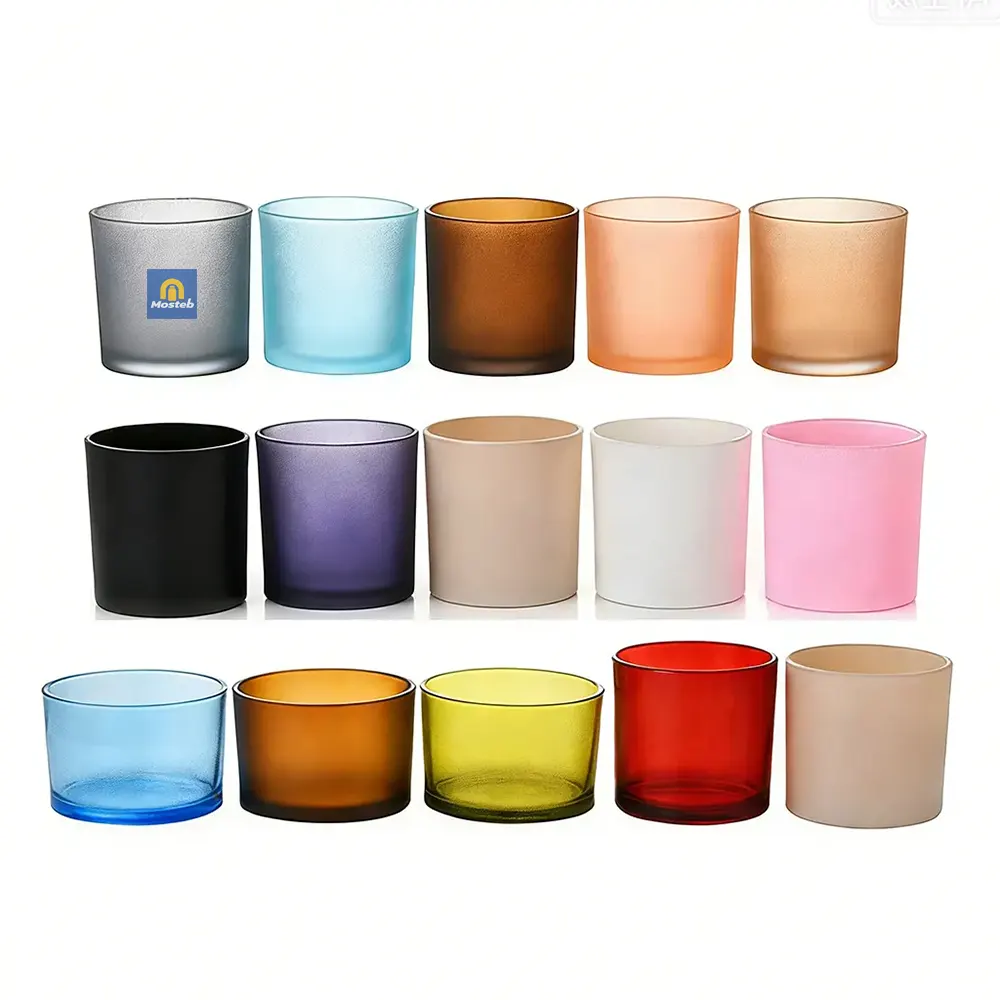
Choosing the right candle jar vendors requires more than comparing unit prices. Prior to ordering a large quantity, buyers must consider aspects such as product quality, manufacturing processes, communication, lead times, compliance, and the long-term availability of supply. This guide will discuss some of the major red flags you should look for when assessing candle jar vendors.
1. Red Flags to Check Before Choosing a Candle Jar Vendor
Initial candle jar vendors selection is critical; thorough due diligence assesses financial stability, business legitimacy, and preliminary quality assurance.
1.1. Warning Signs of an Unstable Supplier
A seller affects their ability to meet financial health obligations and maintain quality. See for:
- Unusual payment conditions: demanding a much larger or quick upfront payment (eg, 70%+) without strong justification.
- Recent bankruptcy or lawsuit: public records reflect severe financial or operational issues.
- Uncomfortable profitability: History of decline or ups and downs in profitability, suggesting continuous operation.
- Unconfirmed banking change: Suddenly the bank switchs without clear business logic.
- Unrealistically Low Pricing: Bids are much less than contestants, indicating frustration or quality agreement.
1.2. Business Legitimacy and Transparency
Assess overall business practices and strategic fit:
- Cultural/Communication Obstacles: Language, cultural differences, time field, or lack of active communication.
- Weak or non-existent contracts: Operating without a strong contract shows significant risk.
- Inadequate Document/Certificate: Inability to share important documents (eg, ISO 9001, product compliance).
- Lack of poor reputation/references: negative reviews, unresolved disputes, or immoral behavior.
- Inflexibility in Samples/Prototypes: Refusal to provide samples aligning with requirements, signaling rigidity.

2. Quality Control & Material-Specific Red Flags
Ensuring candle jar quality is paramount for Mosteb, impacting safety and satisfaction.
2.1. General Quality Control Red Flags
- Glass Surface Defects:Watch for cracks, chips, bubbles, scratches, deformation, discoloration, and other visible defects.
- Edge Smoothness: Rim and base not polished, having sharp edges or burrs.
- Transparency/Color Consistency: Cloudy clear glass; uneven colored glass.
- Uneven Wall Thickness: Non-uniformity, especially at stress-prone areas, increasing thermal shock risk.
2.2. Material-Specific & Critical Defects (Glass & Ceramic)
Specific defects compromise safety and functionality:
- Critical Defects (Glass): Render jar unusable (e.g., broken body/neck, sharp fins, deformation).
- Major Defects (Glass): Cause safety issues or production malfunctions (e.g., cracked bottom, burrs, non-conforming weight/volume).
- Minor Defects (Glass): Primarily affect appearance (e.g., oil marks).High frequency is a red flag.
- Surface Checks: Small, shallow surface cracks.
- Deformed Containers: Irregular shapes or dimensional deformation that affects usability or stability.
- Poor Distribution: Uneven glass distribution leading to weak points.
- Soft Blister: Thin blister near sealing surface.
- Choked Bore: Excess glass inside finish/opening.
- Cracks: Partial fractures, often in heel area.
- Pinhole: Small hole in glass.
- Chipped Finish: Pieces broken from top edge.
- Stone: Small non-glass inclusion.
- Rocker Bottom: Sunken base causing instability.
- Flanged Bottom: Rim of glass at parting line.
- Stuck Plug: Sharp inward projection in neck bore.
- Overpress: Small ridge on sealing surface.
- Split Finish: Small vertical crack from top of finish.
2.3. Manufacturing Process & Testing Red Flags
Defects often stem from process issues:
- Inadequate Raw Material Specifications: Lack of clear specs for raw materials (e.g., oxides).
- Poor Temperature Control: Fluctuations during melting/cooling causing cracking, uneven thickness.
- Uneven Cooling: Cracks from uneven cooling.
- Trapped Gases: Bubbles from trapped gases during melting.
- Kiln Issues: Unclean material or uneven temperature in kiln causing bubbles, particles.
- Incorrect Machine Speed: Too fast/slow speed leading to uneven bodies, thin/thick walls.
- Mold Issues: Poor quality molds, unreasonable design, or mold oil issues.
- Improper Handling: Scratches from poor handling or equipment.
- Annealing Process Failures: Entire batch failure if any glass fails annealing test.
- Lack of Thermal Resistance Testing: Failure to conduct hot water (≥90°C) or burning candle tests.
- Insufficient Mold Number Testing: Testing too few mold numbers (should be approx. 100-600).
- Lack of Clear Incoming Inspection Specs: No detailed specifications for materials/products before inspection.
- Poor Documentation of Inspections: Lack of detailed, accurate records (batch, supplier, dates, results).
- Inadequate QC Facilities/Equipment: Substandard lighting, measuring tools, gauges, microscopes during tour.
2.4. Acceptable Quality Limits (AQL) Red Flags
Mosteb should establish clear AQLs. Red flags include:
- Lack of AQL Understanding/Agreement: Vendor not understanding or agreeing to AQL standards (e.g., ISO 2859-1).
- High AQL for Critical Defects: Proposing AQL > 0 for critical defects.
- Refusal to Adhere to Inspection Levels: Insisting on lower inspection levels than standard Level II.
3. Supply Chain Reliability & Logistics Red Flags
Vendor’s ability to deliver on time and in full is crucial.
3.1. Production & Lead Time Red Flags
Unexpectedly Extended Lead Times: Sudden, unexplained extensions.
- Bottlenecks Due to Missing Parts: Frequent delays from missing components.
- Lack of Capacity Visibility: Inability to provide clear production capacity and future availability.
- Misaligned Supplier Performance Views: Vendor’s on-time/in-full performance differing from customer’s.
- Impact of Volume Changes/New Technologies: Struggling with fluctuations or new requirements.
- Stockouts and Shortages: Frequent raw material or finished goods stockouts.
- Excess Inventory: While less direct, excessive vendor inventory may signal poor forecasting.
- Delivery Delays: Inconsistent stock levels and deliveries outside agreed schedules.
- Lack of Agility/Scenario Planning: Insufficient flexibility making them vulnerable to disruptions.
- Poor Forecast Accuracy: Vendor consistently struggling with internal demand forecasting.
- High Stock Outs/Back Orders: Frequent stockouts/backorders from vendor.
- Low End-to-End Supply Chain Visibility: Insufficient vendor visibility across their supply chain.

3.2. Communication & Relationship Red Flags
- Drop in Communication: Sudden or prolonged lack of communication.
- Reluctance for Proactive Engagement: Unwillingness to allow shop floor “go sees,” preferring reports only.
3.3. Mitigation & Proactive Measures
Absence of these strategies by a vendor can be a red flag:
- Lack of Diversification: Heavy reliance on single sourcing for key components.
- Absence of Contingency Planning: No clear plan for disruptions (e.g., alternate suppliers, extra inventory).
- Limited Technology Adoption: Not leveraging digital tools for efficiency/visibility.
4. Ethical Sourcing, Compliance & Intellectual Property Red Flags
Protecting IP and ensuring ethical compliance are non-negotiable.
4.1. Intellectual Property (IP) Red Flags
IP theft undermines competitive advantage.
- Reluctance to Sign Robust IP Agreements: Hesitation to sign comprehensive IP protection, especially China-centric NNN agreements (Non-Disclosure, Non-Use, Non-Circumvention).
- Lack of Preparation for IP Protection: Failing to protect IP with China-enforceable contracts before engaging a manufacturer.
- Unexplained Price Increases Post-Success: Substantial price increase after product success, indicating IP leverage.
- ODM Factory Risks without IP Enforcement: ODM claiming rights to your design due to lack of clear IP ownership.
- Absence of Document Monitoring: Failure to track critical information (paper/electronic).
- “False Marking” Risks: Vendor labeling goods with trademark symbol (®) without Chinese registration.
- Inadequate Supply Chain IP Management: Vendor not managing IP risks within their own supply chain.
4.2. Ethical Sourcing & Compliance Red Flags
- Lack of Transparency in Labor Practices: Unwillingness to provide information on labor conditions, wages, hours, or child labor.
- Absence of Regulatory Compliance Documentation:Failure to provide evidence of compliance with regulations (e.g., RoHS, REACH, local permits).
- No Ethical Standards Clause in Contract: Vendor resisting inclusion of ethical standards clause.
- Poor Reputation for Social Responsibility: Public reports of unethical behavior, human rights abuses, or environmental damage.
- Lack of Auditable Records: Inability to provide auditable records for material sourcing, waste disposal, or labor hours.
- Geopolitical Tensions: For international suppliers, tensions disrupting goods flow or raising ethical concerns.
- Environmental Factors: Vendor in areas prone to extreme weather or resource scarcity, with potential ethical implications.

5. Red Flags After You Start Working With a Candle Jar Vendor
A supplier can be promising when it’s first evaluated and then let down when it comes to normal production. Quality issues, delivery delays, price fluctuations and poor communication for brands can lead to rapidly rising costs and product launch failures. Buyers can use this vigilant approach after ordering to determine if there are any issues to address and if there is a back-up supplier.
5.1. Declining Quality and Recurring Production Problems
A decrease in the quality of glasses after the initial few orders is one of the most obvious indicators. A supplier might be able to give a satisfactory sample of the product, but during production it might create more defective candle jars.
Inspect for any reoccurrence of cracks, chips, bubbles, thickness problems, size discrepancies, poorly leveled bases and inconsistent glass color. Any issues with decoration such as peeling prints, uneven coatings and misaligned logos should be monitored as well.
Don’t assume that if there is a defective batch that the supplier is not reliable. If a defect is repeated following corrective action request, this could mean that there is a deficiency in the supplier’s production or quality control. Inspection results should be used for comparison between the different batches of the material, not for the assessment of the vendor.
5.2. Repeated Delays, Cost Changes, or Supply Problems
Sometime delays in delivery may occur due to shipping disruptions, raw material shortages or unexpected production disruptions. If there are repeated delays without any clear explanation this is a more serious warning sign!
Keep an eye on whether the vendor can make the production schedules that they agreed to and whether they give reasonable time frames and whether they communicate problems before delivery. A dependable candle jar distributor ought to recognize obstacles and have a sensible recovery plan.
Unexpected price or minimum order changes should also be noted. Occasionally these additional tooling costs, packaging costs, material surcharges, or MOQs are legitimate, but changes between the initial quote and subsequent order can lead to serious inventory and cost issues.
5.3. Poor Communication and Resistance to Corrective Action
Supplier risk issues can frequently manifest in communication issues before they turn into significant operational problems. When it takes longer and longer to respond, sometimes production updates are ambiguous or specific questions are either glossed over or downplayed, then a vendor becomes a concern.
The supplier should also be able to look into the quality issues, if any, which are raised and take corrective action. If the operator refuses to be inspected in a reasonable manner, refuses to give batch details, or repeatedly says it will fix the same issue, without any real progress, then it should not be ignored.
As a result of the red flag, record the issue and compare the live performance with the specifications, quotation, lead time and quality expected. If it can be corrected, ask for specific corrective steps and a reasonable time frame for them to take place. If your issues persist in several orders, it could be a good idea to consider a different candle jar supplier.
One shouldn’t only judge a reliable long term supplier by the quality of the first order! Whether or not a candle jar merchant can grow their business long-term is much more evident with consistent performance through multiple production runs.