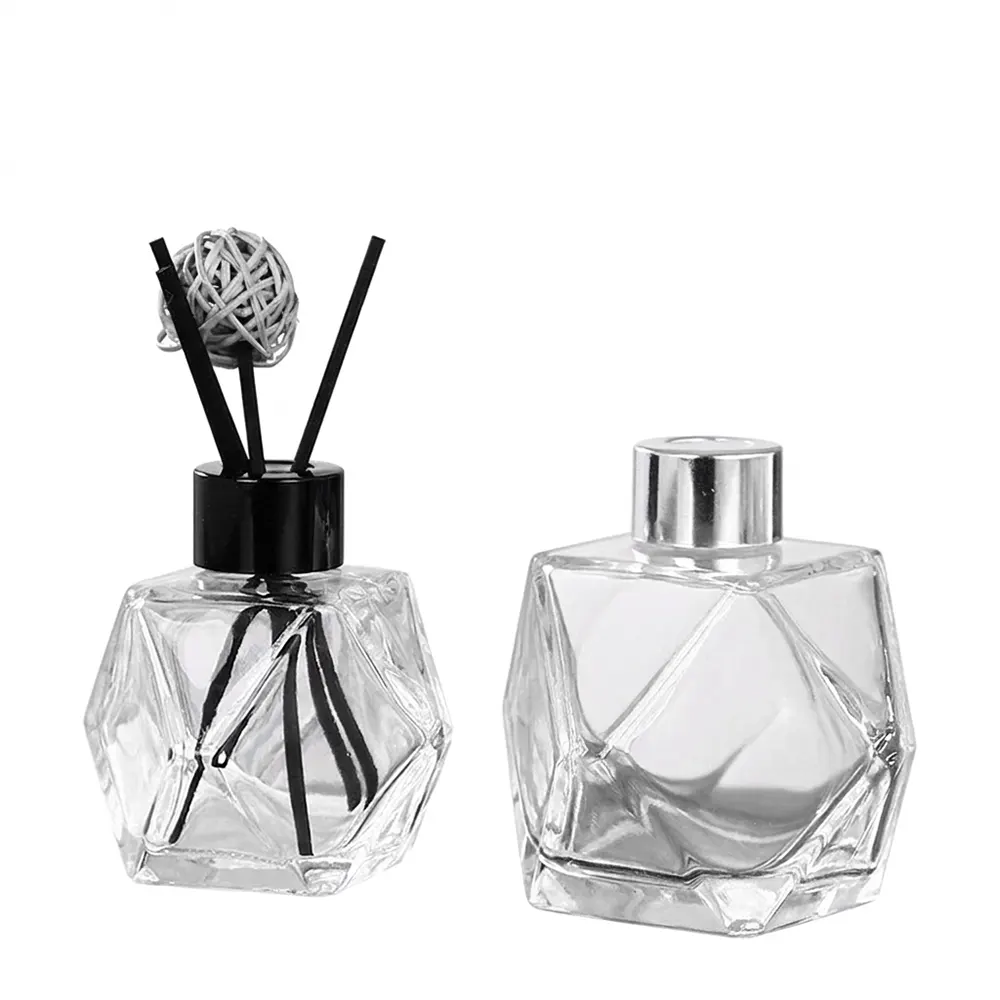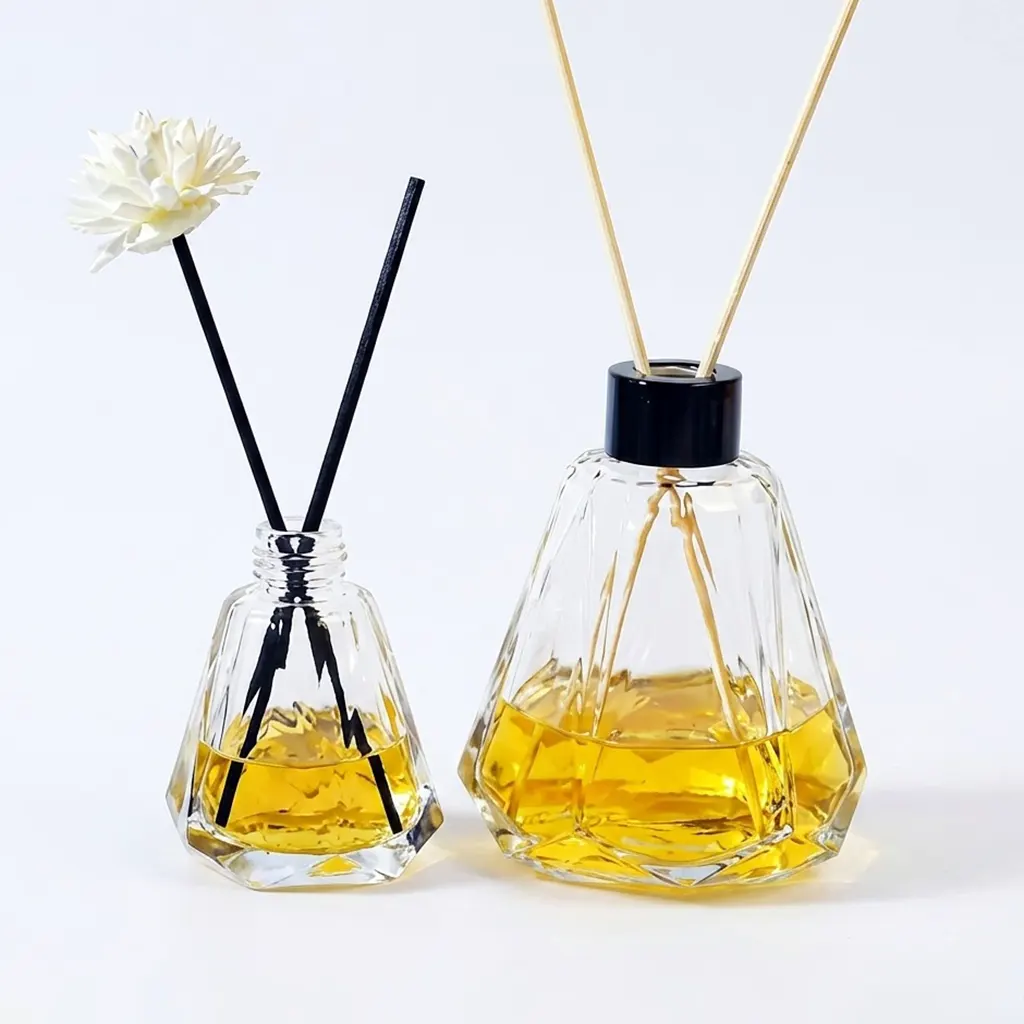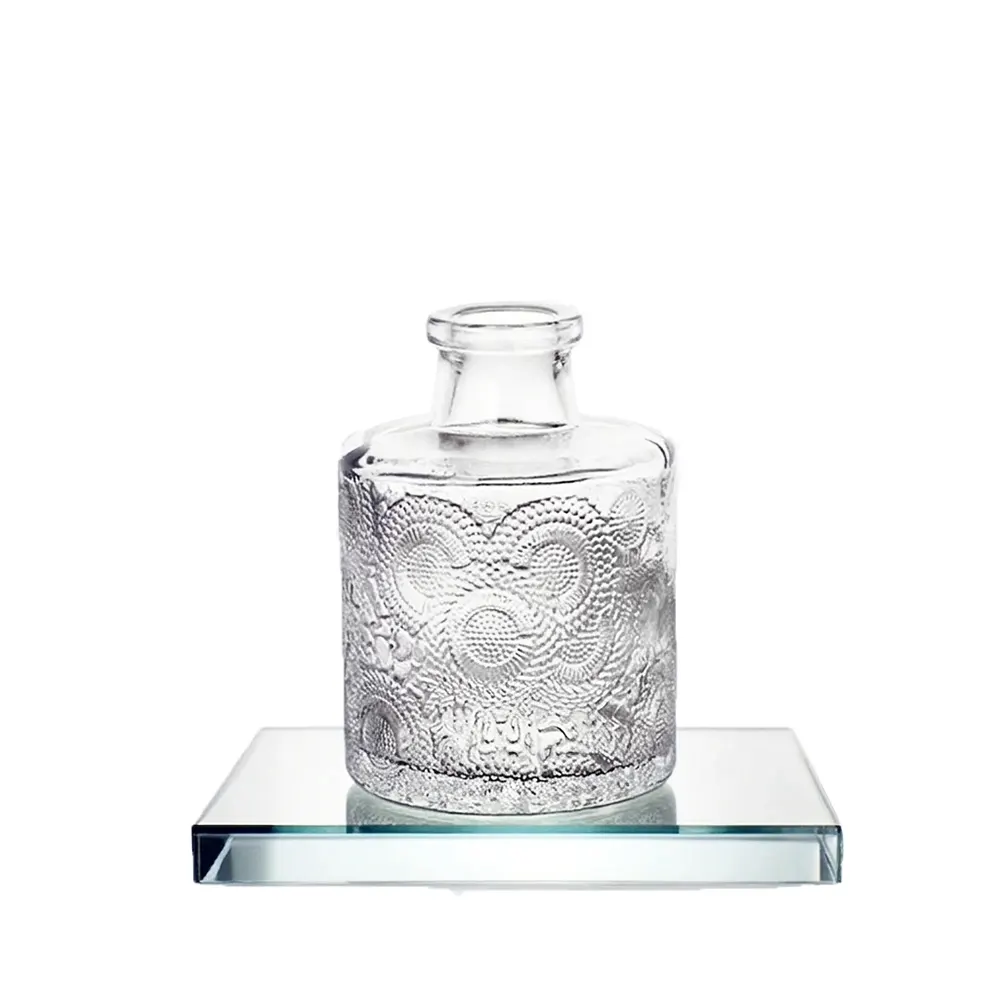
Sourcing glass diffuser bottles, it’s possible to think that soda-lime vs borosilicate glass diffuser bottles work in the same way, given that they are both visually alike packaging materials. In practice their chemical and thermal properties vary and this can impact the performance of the bottle with certain diffuser formulations and storage and transport conditions. When assessing soda-lime versus borosilicate glass diffuser bottles, the use of heavy metal leaching and product compliance should be considered in conjunction with chemical compatibility, product design and intended market.
1. Material Difference That Actually Matters in Compliance
Soda-lime glass dominates the packaging industry for one reason—it is cheap and scalable. The material consists mainly of silica (SiO₂) and sodium oxide (Na₂O) and calcium oxide (CaO), which enables easy construction of its structure for mass production yet results in mobile alkali parts that will take part in ion exchange processes when the material comes into contact with certain chemical substances.
Borosilicate glass, on the other hand, replaces part of that alkali-sensitive network with boron trioxide (B₂O₃), creating a tighter molecular structure with significantly lower thermal expansion and reduced chemical reactivity. The material demonstrates minimal interaction with aggressive compounds which exist in diffuser oils when exposed to the temperature changes that occur during shipping and storage.
This is not theoretical chemistry—it is the reason laboratory glassware and pharmaceutical containers rarely rely on soda-lime formulations when long-term stability is required.

2. What Actually Determines Heavy Metal Leaching?
Don’t make the mistake of assuming that heavier glass is necessarily more durable than soda-lime glass, since the migration of heavy metals can vary. Trace elements can originate from raw materials, colourants, recycled cullet, decoration or other parts of packaging. The formulation, manufacturing control, surface condition, diffuser liquid, exposure time and method of testing can all impact the final result.
The risk of diffuser bottles increases because their glass material does not become toxic but their surface interaction patterns evolve as time passes. Essential oils often contain acidic compounds and alcohol solvents and reactive organic molecules which can slowly accelerate ion exchange on less stable glass surfaces.
Regulatory requirements vary according to the end market and the application of the packaging. Buyers must determine which of the food-contact requirements might apply to the finished fragrance product and not assume that the food-contact requirements will automatically apply to non-food packaging of fragrance.
The actual problem requires assessment of leaching because scientists need to measure its extent and duration and the specific environmental conditions that cause it.
3. When Borosilicate Glass May Be the Better Choice
Borosilicate glass may be useful for those applications where a diffuser formulation or distribution environment is demanding higher thermal or chemical resistance. It has lower thermal expansion and is generally more resistant to chemicals, so may be a good choice for applications that require this. While the choice of borosilicate glass may be a good first step towards ensuring regulatory compliance, it is not the final one. However, compliance still requires the full packaging system, formulation, application and relevant test requirements.

4. Soda-Lime Glass and the Real Source of Leaching Variability
Soda-lime glass maintains safety standards because it requires specific raw materials and production methods to manufacture. Recycled cullet can be an important part of glass production, but its quality and composition need to be properly controlled. Buyers who are worried about trace element migration don’t just need to know if glass is recycled, but how the manufacturer is managing raw materials, cullet quality, cullet formulation and testing of the final product.
The primary cause of actual compliance problems arises from between-batch variations which affect the final product more than the core recipe. A production line may pass initial testing, but fail under extended exposure conditions that simulate real diffuser usage over weeks or months.
5. Comparative Overview: Material Behavior Under Compliance Pressure
| Factor | Soda-Lime Glass | Borosilicate Glass | Buyer Consideration |
| Chemical Resistance | Generally lower | Generally higher | Consider diffuser formulation and exposure time |
| Thermal Expansion | Higher | Lower | Important for temperature changes |
| Thermal Shock Resistance | Moderate | Higher | Relevant to demanding transport or use conditions |
| Cost | Generally lower | Generally higher | Balance performance with target cost |
| Heavy Metal Migration | Depends on formulation and raw materials | Depends on formulation and raw materials | Verify through appropriate testing |
| Typical Use | General glass packaging | More demanding applications | Select based on actual application |
6. The Compliance Reality Behind “Glass is Safe”
Theoretical research shows that glass serves as the most secure available packaging material. Actual safety depends on three factors which include formulation control and manufacturing consistency and the conditions during product use. The assumption that all glass behaves the same under chemical exposure is one of the most persistent misconceptions in packaging procurement.
The material showed no changes but testing conditions uncovered weaknesses that laboratory tests failed to detect.
The soda lime glass is still cheaper, and can be used in many diffuser packaging applications that are performing well. The choice of formulation, container design, temperature conditions, degree of durability, market target, and test should be the deciding factor rather than the type of material.
7. How to Compare Soda-Lime vs Borosilicate Glass Diffuser Bottles
The correct comparison is not visual or even structural—it is exposure-based. The assessment of soda-lime and borosilicate glass diffuser bottles requires three factors, which include material chemical properties, diffuser formulation interaction over time, and regulatory requirements from different markets, which include EU REACH and U.S. indirect contact guidelines.
Most sourcing decisions fail because they only evaluate cost and appearance at the procurement stage, ignoring how chemical interaction evolves over time under real logistics conditions.

8.FAQ
8.1.What is the difference between soda-lime and borosilicate glass diffuser bottles?
Leaching of heavy metals from diffuser bottles made up of soda-lime and borosilicate glass is referred to as a potential comparison of different types of glass materials for liberating trace metal ions such as lead, cadmium, or antimony into the surrounding liquid over time due to their chemical structure, raw material purity and environmental exposure conditions.
8.2. Does borosilicate glass reduce heavy metal leaching?
Borosilicate glass is more chemically resistant than soda lime glass, which is beneficial for some high-performance applications involving liquids. But the type of glass is not enough to determine heavy metal migration. All of these factors should be taken into account for raw materials, formulation, colorants, recycled cullet, surface treatments, diffuser formulation, exposure conditions and the applicable test method.
8.3. Is soda-lime glass suitable for diffuser bottles?
Manufacturers need to use soda-lime glass because it safely functions as a diffuser bottle material when they control their production process and obtain their materials through approved methods. The material presents unpredictable chemical stability which results in higher potential for chemical leakage when it faces extended contact with active diffuser substances and varying temperatures.
8.4. How should buyers test diffuser bottles for leaching and compliance?
The analysis requires two steps which need to be completed for testing soda-lime and borosilicate glass diffuser bottles to examine their heavy metal leaching performance and regulatory compliance. The first step requires analysis of chemical composition stability and raw material consistency, while the second step needs to test exposure behavior with diffuser liquids and the regulatory thresholds used in target markets. The study needs to establish compliance through testing, which requires both material testing and real-world testing of operational conditions between different materials.